

Driving on the freeway in the rain can feel confronting, especially around Perth, where heavy showers can move in quickly. If you are learning to drive as an adult, returning after a long break, or converting an overseas licence, it is completely normal to feel tense at the idea of wet-weather freeway driving.
Why Wet Weather Freeways Feel So Difficult
Freeways combine higher speeds, more traffic, and fewer places to pull over. When you add rain, everything feels faster and closer. Your view is not as clear, the road surface changes, and you have less room for mistakes. Understanding what is happening helps you stay calmer and make safer choices.
Reduced Visibility
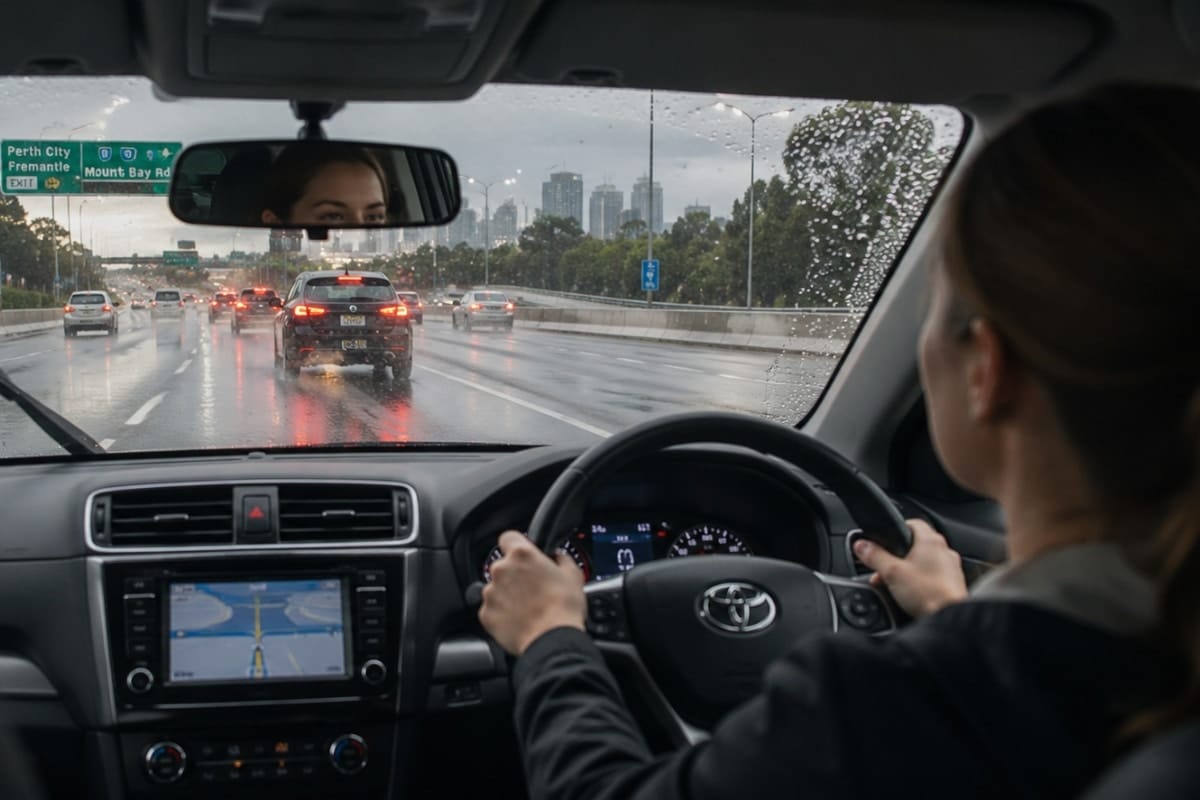
Rain affects what you can see and how well others can see you. On Perth freeways, spray from other vehicles, especially larger ones, can cover your windscreen and mirrors. At the same time, low clouds and reflections from wet roads can make it harder to judge distance and read signs in time while driving on the freeway in the rain.
If you are new to driving in Western Australia, you might notice that freeway signs, lane markings, and exits appear suddenly through the rain. This can feel overwhelming, especially when you are trying to stay in the correct lane for your route or for your future PDA while driving on the freeway in the rain.
Slippery Surfaces and Hydroplaning
When rain sits on the road, especially after a dry spell, it mixes with oil and dirt. This creates a slippery film that reduces your grip. At higher freeway speeds, your tyres can ride up on the water rather than grip the bitumen. This is called hydroplaning, and it makes steering and braking less effective.
For nervous learners or mature drivers returning to the road, just knowing this can happen may increase anxiety. With step-by-step guidance, you can learn simple techniques that reduce the risk and help you stay in control if the car feels like it is floating.
Increased Stopping Distances
In the rain, your tyres need more distance to slow and stop. On the freeway, where everyone is travelling faster, this extra distance matters. If you follow too closely while driving on the freeway in the rain, you may not have enough space to react if traffic suddenly slows for congestion, a crash, or roadworks.
Many learners worry about being “too slow” or holding people up, so they sit closer to the car in front. With coaching from a calm instructor like Lisa at Dovetail Driving School, you can learn to maintain a safe gap that complies with WA road rules and PDA expectations, without feeling pressured by other drivers.
Emotional Pressure and Local Conditions
Freeway rain driving often brings up worries such as:
- Adult beginners
feeling behind friends and worried about making a mistake at high speed - Mature drivers
concerned that nerves or slower reactions will be judged - Overseas drivers
adjusting to left-side driving, different road markings, and unfamiliar freeway layouts
You are not alone in these feelings. With personalised, one-on-one freeway lessons that include wet-weather planning and practice, you can turn that anxiety into calm, confident skills that support you well past your PDA and into everyday Perth driving.
Preparing Yourself and Your Vehicle Before Driving in Rainy Freeway Conditions
Good preparation takes a lot of the fear out of rainy freeway driving. When you know your car is safe and you have a clear plan, your brain has more space to focus on smooth, calm driving.
Quick Safety Checks Before You Leave
Before any wet-weather freeway trip, give your car a simple safety check. You can learn these steps in lessons with Lisa, then repeat them on your own:
- Tyres
Check that the tread looks deep and even, and the tyres look firm, not flat or saggy. Good tread helps push water away and reduces the risk of hydroplaning. - Wipers
Turn them on and see if they clear the windscreen cleanly. If they leave streaks or chatter, they may need to be replaced. - Lights
Test headlights, tail lights, brake lights, and indicators. In the rain, other drivers rely on your lights to judge your position and speed. - Brakes
As you start driving at low speed, gently press the brake pedal. It should feel firm and consistent, not soft or spongy.
If you feel unsure about these checks, Lisa can walk you through a clear routine, or you can read more in the car safety guide on whether your car is safe for lessons and tests.
Planning Your Route Around the Weather
Freeway driving in the rain feels easier when you know what to expect. Before you set off, take a few minutes to:
- Check the forecast
Look at the radar to see if heavy showers or storms are likely during your trip. - Choose a calmer time
If you are nervous, avoid the busiest peak periods when you can. - Pick familiar exits
Use routes with on-ramps and off-ramps you already know from lessons or past drives. - Allow extra time
Give yourself a buffer so you do not feel rushed if you need to slow down for the conditions.
Adult learners, shift workers, and parents often juggle many commitments. Planning in this way helps you avoid the pressure of running late, which often leads to poor decisions on the freeway.
Mental Preparation for a Calm Drive
Your mindset matters just as much as the car. Before you join the freeway in the rain, try this simple routine:
- Pause before starting the engine
Take 3 slow breaths: in through your nose, out through your mouth. Feel your shoulders drop. - Set a clear intention
For example, “I will keep safe gaps” or “I will stay smooth and steady.” - Break the trip into stages
Think “from home to the on ramp, from the on ramp to exit [X], from the exit to my destination,” rather than one huge, scary journey.
Many learners worry that nerves mean they are not ready. In reality, well-prepared nervous drivers often become very safe drivers, especially when driving on the freeway in the rain. With one-on-one coaching, Lisa helps you practise this mental routine during lessons, so it feels natural on test day and in everyday Perth rain.
Key Safe Driving Techniques for Freeway Driving in the Rain
Once you and your car are prepared, the way you drive on the freeway in the rain makes the real difference. These techniques help you stay in control, comply with WA road rules, and demonstrate good habits for your Practical Driving Assessment.
Adjusting Your Speed to Match Conditions
The speed limit is the maximum in good conditions, not a target you must reach. In heavy rain or when water is sitting on the road:
- Ease back a little
Choose a speed that feels steady and safe, where you can clearly see ahead and react calmly. - Keep your speed smooth
Avoid sudden speeding up or slowing down, especially on curves or over puddles. - Watch the flow of traffic
Travel with the general flow, without racing or lagging so much that you become a hazard.
During a PDA, assessors look for speed that matches the conditions. Lisa will help you learn how to judge this on real Perth freeways.
Keeping a Larger Following Distance
Wet roads increase stopping distance. On the freeway, give yourself more space than you would in the dry:
- Choose a clear reference point on the road ahead.
- When the car in front passes it, count a steady gap in your head.
- If you arrive at the same point too quickly, gently ease off to create space.
If another driver cuts into your gap, stay calm, ease off again, and rebuild your space. Assessors like to see this kind of patient, defensive driving.
Smooth Steering, Braking, and Acceleration
On wet freeways, sudden movements can compromise the tyres’ grip. Aim for:
- Gentle steering
Turn the wheel gradually for lane changes and curves. - Progressive braking
Start braking earlier and increase pressure smoothly as you slow. - Soft acceleration
Press the pedal gradually, especially when joining or leaving the freeway.
Lisa spends time in lessons helping you develop this smooth, flowing style, which is exactly what PDA assessors want to see, whether it’s raining or dry.
Using Your Headlights Correctly
In WA, you should use your headlights when driving on the freeway in the rain so others can see you clearly.
- Select the low beam as soon as visibility drops.
- Use fog lights only if your car has them and visibility is very poor.
- Never use high beam in traffic, as it can dazzle other drivers and reflect off the rain.
Good light use is a common PDA marking point, especially in low visibility conditions.
What To Do If You Hydroplane
If your tyres ride up on water and the car feels light or floaty, it can be scary. A simple plan helps you stay calm:
- Stay steady on the steering wheel
Keep it straight, avoid jerking or sharp turns. - Ease off the accelerator
Gently lift your foot so the car can slow down on its own. - Avoid heavy braking
If you must brake, do it very gently.
The grip usually returns quickly as the tyres reconnect with the road. Practising calm reactions with Lisa in safe conditions prepares you for the real thing and supports the defensive driving skills assessors look for. If you want to deepen your understanding, you can also read more about how weather affects braking and reaction time for new drivers.
You can learn these techniques step by step. With patient, one-on-one freeway lessons that include wet weather practice, Lisa helps you turn confusing advice into clear, repeatable habits you can rely on in Perth traffic and on your PDA.
Navigating Traffic and Freeway Features in Wet Conditions
Freeway traffic can feel intense in the rain, especially when you are still building confidence while driving on the freeway in the rain. The good news is that with clear steps and calm practice, you can manage on-ramps, off-ramps, lane changes, and heavy traffic without feeling pushed or rushed.
Joining the Freeway Safely in the Rain
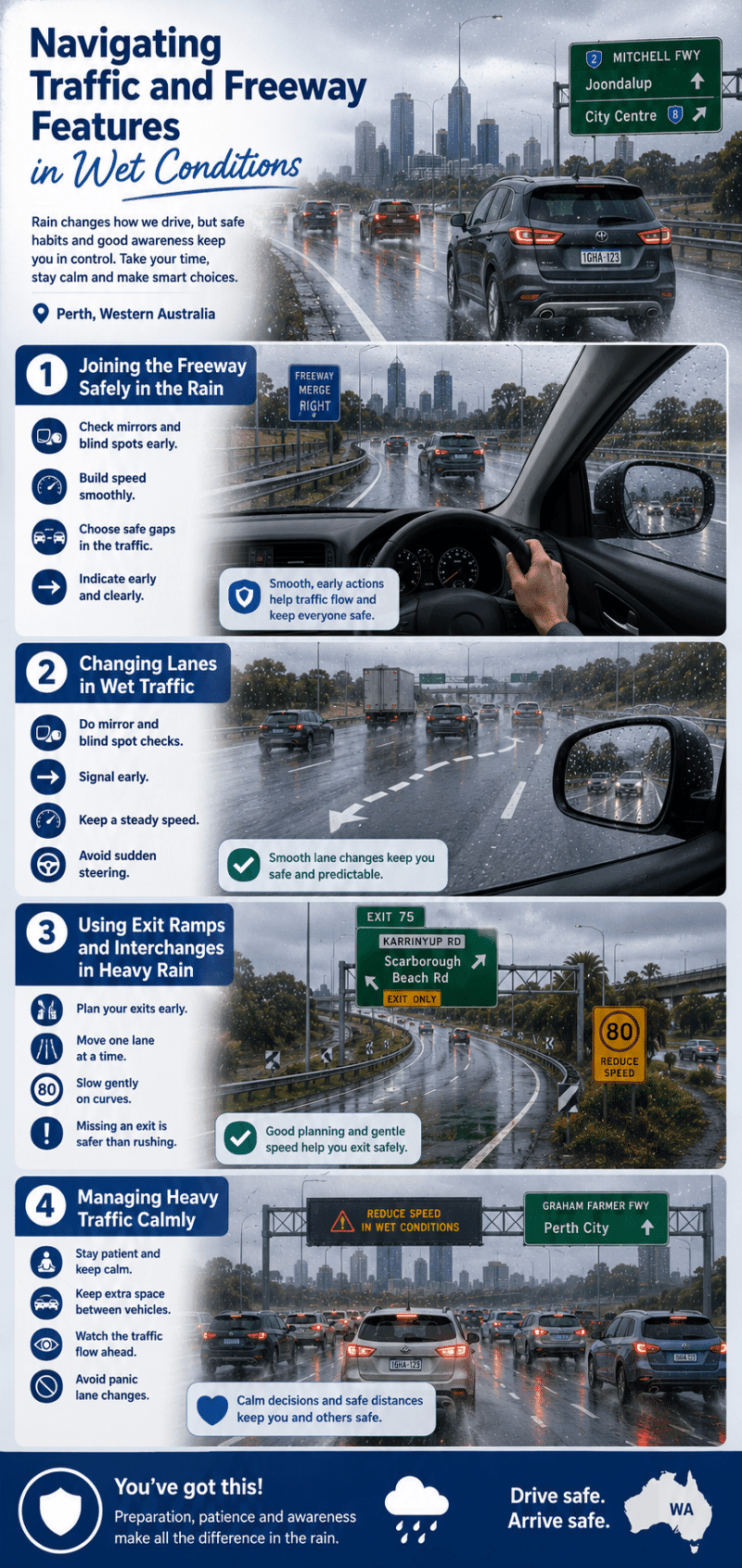
On ramps can feel fast, but you do not need to launch yourself into a tiny gap. In wet conditions, focus on:
- Early observation
Check mirrors and blind spots as you travel along the entry lane, not just at the end. - Gradual acceleration
Build up speed smoothly so you are close to the freeway speed, while still feeling in control. - Choosing a clear gap
Look for a space that lets you merge without hard braking or sharp steering. - Using indicators early
Let other drivers see your plan so they can adjust.
If the traffic is heavy on the freeway during heavy rain, keep your speed steady and wait for a safe opening. During a PDA, assessors want to see patience and judgment, not risky squeezes into tiny gaps.
Changing Lanes and Merging in Wet Traffic
Lane changes in the rain feel easier when you follow a consistent routine. Lisa teaches a clear pattern you can repeat every time:
- Check ahead to make sure the lane change is needed and legal.
- Check mirrors, then your blind spot in the direction you want to move.
- Signal early and keep a steady speed.
- Gently steer into the new lane, and avoid sudden movements.
- Cancel the indicator and rebuild a safe following distance.
If the gap closes, stay in your lane, cancel your signal, and try again later. This calm choice shows good hazard perception and is viewed positively in assessments.
Using Exit Ramps and Interchanges in the Rain
During heavy showers, freeway exits and interchanges can appear quickly while driving on the freeway in the rain. To stay calm:
- Plan your exit early so you have plenty of time to move to the correct lane.
- Signal and move across one lane at a time, using the same safe lane change routine.
- Reduce speed gently on the exit ramp, especially on curves where water can pool.
- Watch for changing speed limits and traffic lights at the end of the ramp.
If you miss your exit, stay relaxed and take the next one. Getting lost is less of a problem than making a late, unsafe lane change in the wet.
Managing Heavy Traffic and Unfamiliar Layouts
Heavy wet-weather traffic can feel overwhelming, especially on a new freeway. You can make it easier by:
- Staying in the middle lane where possible, so you are not juggling constant merging and exiting.
- Keeping extra space around your car gives you time to react if traffic suddenly slows.
- Watching the brake lights ahead serves as an early warning that traffic is about to bunch up.
- Using clear landmarks and signs instead of relying only on GPS at the last second.
During freeway lessons with Lisa, you can practise specific Perth routes, including complex interchanges, at a pace that suits you. If you feel very unsure about driving on busy freeways in the rain, you might also benefit from structured freeway driving lessons that focus on merging and traffic flow, or from broader defensive driving skills for WA roads.
You do not have to face wet-weather freeway traffic alone. With one-on-one guidance, clear routines, and patient practice, you can learn to handle driving in rainy freeway conditions in Perth calmly.
Building Confidence and Overcoming Nervousness While Driving in Rain
Feeling anxious about rainy freeway driving is very common, especially if you learned later in life, have not driven for a long time, or are new to Western Australian roads while driving on the freeway in the rain. Nervousness does not mean you are a bad driver. It simply means your brain has not yet had enough safe practice to feel settled.
Step by Step Exposure, Not a Big Leap
Confidence grows in small, planned stages. With Lisa, you might:
- Start with dry weather freeway lessons at quieter times.
- Move to light showers on familiar routes once you feel ready.
- Practise in heavier rain only when your skills and comfort have grown.
This steady approach suits adult beginners, mature drivers, and overseas drivers who need time to adjust to rainy freeway driving. You stay in control of the pace, and Lisa checks in regularly so you never feel pushed into conditions you are not ready for.
Simple Breathing to Calm Your Body
When you feel tense, your breathing often becomes shallow, which makes you feel more panicked. Try this easy pattern at traffic lights, in a safe parking spot, or before you start the car:
- Breathe in through your nose for a slow count of 3.
- Hold gently for a count of 2.
- Breathe out through your mouth for a slow count of 4.
- Repeat 3 to 5 times while relaxing your shoulders and jaw.
You can practise this at home so it feels natural in the car. During lessons, Lisa often talks you through it, so you do not feel silly or embarrassed.
Resetting Unhelpful Thoughts
Many learners have thoughts such as “I am behind,” “Everyone is judging me,” or “If I make one mistake, I will fail” while driving on the freeway in the rain. These thoughts increase anxiety and distract you from the road.
Try replacing them with calm, practical phrases, for example:
- I am learning, not perfect, and that is okay.
- My job is to drive safely, not to impress other drivers.
- I can slow down and give myself more space.
During a PDA or reassessment, assessors expect some nerves. They are looking for safe choices, not perfection. Lisa helps you understand common test mistakes and how to avoid them, so your mind has clear facts rather than fear. If you want more structured support, you can read her guide on common reasons learners fail the driving test in WA.
Feeling Supported, Not Judged
Mature drivers and overseas licence holders often worry about being judged for “forgetting” skills or having different habits during freeway driving in heavy rain. In one-on-one lessons with Lisa, you work at your own pace, with steady feedback and plenty of reassurance.
You deserve patient, respectful instruction. If rainy freeway driving is holding you back from full independence, booking a calm, focused lesson with Lisa is a practical next step that can make your very next wet-weather drive feel more manageable.
Preparing for Your Driving Assessment (PDA) in Rainy Conditions
Wet weather on PDA day can feel scary, but it does not have to ruin your chances. If you prepare for rain in your lessons, it simply becomes another condition you already know how to handle.
What PDA Assessors Look For In The Rain
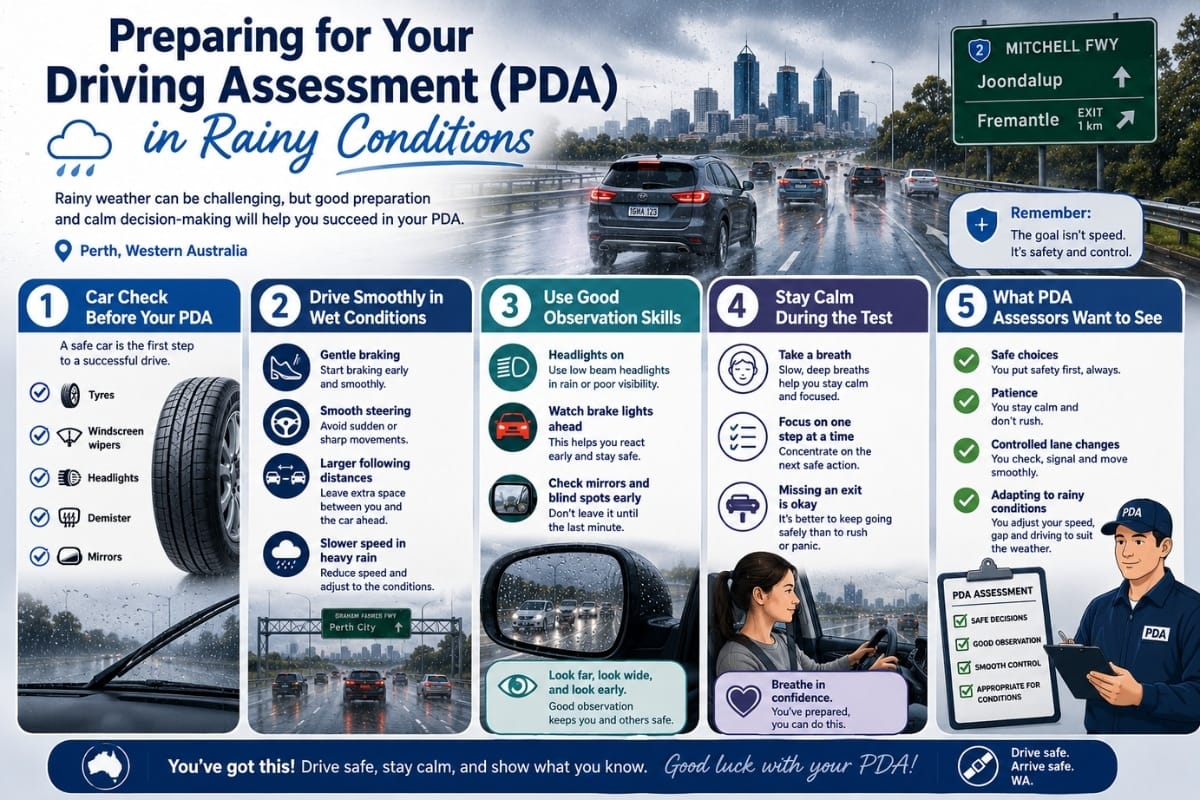
In rainy conditions, assessors pay close attention to how you adjust your driving. They want to see that you:
- Match your speed to the conditions rather than just sitting at the limit.
- Increase the following distance so you have time to brake gently.
- Use headlights correctly and make clear, early signals.
- Keep control of the car with smooth steering, braking, and acceleration.
- Stay calm when making mistakes, such as missing an exit, and correct safely.
Rain does not change the rules; it only makes safe habits more important. Lisa shows you how these habits look from an assessor’s perspective, removing a lot of guesswork.
Building Rain Practice Into Your Lessons
Instead of hoping for perfect weather, Lisa plans for different conditions as part of your PDA preparation. Together, you can:
- Schedule some lessons during light or moderate rain, on purpose.
- Practise common PDA style routes on Perth freeways in both dry and wet conditions.
- Repeat key skills such as merging, lane changes, and exits until they feel automatic.
- Use short reflection breaks to talk about what the assessor would like or dislike about each decision.
If you want more structured practice ideas, you can also read Lisa’s guide to driving test practice in WA.
Step-by-Step Plan For A Rainy Test Day
Before your PDA, you and Lisa can agree on a simple rainy day plan, so you feel prepared, not surprised:
- Car check
Confirm tyres, wipers, demister, and lights are working. If you are unsure about your own car, Lisa can provide a suitable, test-ready vehicle through her PDA car hire service. - Arrival
Aim to arrive early so you can sit in the car, settle your breathing, and adjust mirrors without rushing. - Mindset
Remind yourself that the assessor expects you to slow down in heavy rain and that doing so is a positive choice. - During the test Focus on one task at a time, such as “safe gap,” “smooth lane change,” or “gentle braking,” instead of thinking about the whole result.
- Afterwards
Whatever the outcome, review what you handled well in the wet and what you want to polish next.
You are allowed to be nervous. With calm, one-on-one coaching from Lisa and clear practice in real Perth rain, you can walk into your PDA knowing you have already driven safely in these conditions. That confidence shows in your driving, and assessors notice it.
Post-Drive Reflection and Continuous Improvement
Every rainy freeway drive is a chance to grow your skills. Instead of just feeling relieved that it is over, take a brief moment to reflect on each trip as progress toward safer, calmer driving in all weather.
A Simple Reflection Routine After Each Wet Freeway Drive
You do not need a long debrief. A few focused questions can make a big difference. As soon as you are parked safely at your destination, ask yourself:
- What went well?
Think of at least one thing, such as keeping a good gap, using smooth braking, or handling a tricky merge. - What felt uncomfortable?
Notice any moments where your heart raced, you felt rushed, or you were unsure what to do. - What would I like help with?
Turn those uncomfortable moments into clear topics for your next lesson.
Always start with what went well. This trains your brain to notice your progress, not just your worries.
Keeping a Simple Wet Weather Driving Log
A short log helps you see improvement over time, especially if you feel “stuck” or behind. You can use a notebook, your phone, or a simple template, such as:
- Date and route
For example, “Freeway from [area] to [area].” - Weather
Light rain, heavy rain, showers, or wind and rain together. - What I did well
List at least one skill you handled better than last time. - What I want to improve
Choose one or two skills, such as judging gaps or calmly using the demister. - Questions for Lisa
Note anything you want to discuss in your next lesson.
Over a series of entries, you can see your confidence and control growing, even if it feels slow from day to day.
Turning Reflections Into Lesson Plans
Your reflections become powerful when you share them with your instructor. In one-on-one lessons with Lisa, you can bring your wet-weather notes and say, “These are the parts of rainy freeway driving that still worry me,” especially during freeway driving during heavy rain. Together, you can:
- Revisit specific skills such as freeway entry, lane changes, or exits in the rain.
- Practise problem spots on real Perth routes, at a pace that suits you.
- Link each concern to Practical Driving Assessment expectations so you know exactly what WA assessors want to see.
If you are not sure how many lessons you might need to feel settled, Lisa’s guide on how many driving lessons a beginner might need can help you plan your learning path.
Building Long-Term Safe Habits in All Weather
Continuous improvement is not only for your PDA. Adult beginners, mature drivers, and overseas licence holders all benefit from maintaining this habit of reflection after any challenging drive, including night trips, unfamiliar routes, or freeway driving in the rain. If you would like structured support across different conditions, you might consider exploring beginner driving lesson packages with Lisa.
You do not have to “get it right” on the first wet freeway drive. With calm reflection, a simple log, and targeted one-on-one coaching, each rainy trip becomes another steady step toward confident, lifelong safe driving on Perth’s freeways.






Recent Comments