
Learning to drive in WA: how your skills develop
Learning to drive in WA involves building your skills through supervised practice: first learning the controls, then handling quiet roads, parking, traffic and freeway driving, before preparing for your Practical Driving Assessment (PDA). You can begin driving solo once you hold a valid provisional licence and follow its conditions. Progress depends on consistent safe performance and meeting WA’s licensing requirements.
The stages below are a flexible guide, not a lesson schedule. Some skills develop together, and you may revisit an earlier stage as conditions become more demanding. Feeling confident helps, but readiness also means observing carefully, controlling the car and making safe decisions consistently.
Use these signs to discuss your progress with Lisa or your supervising driver. You do not need to know how to drive before your first lesson.

The licensing steps behind the driving lessons
You can apply for a car learner’s permit from age 16. You’ll need to visit a service centre, bring proof of identity, submit a completed application form, pay the relevant fees, and pass a theory test and eyesight test before you’re issued your permit.
If you’re under 25, you need to record at least 50 hours of supervised driving, including 5 hours at night, before your PDA. Use the official learner logbook or Learn&Log. If you’re 25 or older, you are exempt from logging hours, but still need supervision and must meet the applicable test requirements.
You can sit the Hazard Perception Test (HPT) from age 16 years and 6 months, after holding your permit for at least 6 months. To take the PDA, you must be at least 17, have held your permit for at least 6 months, have passed the HPT and have completed the required logged hours if you’re under 25.
Pass the PDA, and you move on to a provisional licence, which comes with its own conditions, including a 0.00% blood alcohol limit and, in the red P stage, passenger and night-driving restrictions.
From car familiarity to the freeway: how each stage builds
Each stage below has its own goal, and moving to the next one depends on what you can actually manage, not how many lessons you have had.
What will you learn in your first lessons?
The first goal is to feel comfortable with the car and understand its controls. While parked, you can learn to adjust the seat and mirrors, fasten your seatbelt, and identify the pedals, indicators, and other controls. Lisa can introduce moving off and stopping when you are ready.
With practice, these tasks take less concentration. A useful sign of progress is being able to set yourself up and explain which control you need without guessing. Revisit the basics when you change vehicles or feel uncertain. The beginner driving lessons page explains this early work in more detail.
When are you ready for quiet-road driving?
Quiet streets give you room to practise steering, smooth braking, speed control and observation with fewer demands at once. The aim is to control the car while noticing what is happening around it, including pedestrians, driveways and parked vehicles.
Look for a steady lane position, appropriate speed and early responses to hazards across several practice sessions. Your supervisor should need fewer reminders, while staying ready to help. If your attention narrows to the controls or your positioning becomes inconsistent, return to a simpler route. Choose the next challenge together, based on safe performance rather than confidence alone.
How does parking fit into your progress?
Parking builds low-speed control, awareness of the car’s position and observation around the whole vehicle. Practise in a suitable quiet location before adding tighter spaces or more activity nearby. A successful park involves safe observation and control as well as finishing within the space.
Readiness shows when you can judge available room, check for people and vehicles, and pause to reassess without rushing. Revisit simpler spaces if you rely heavily on prompts or concentrate so hard on steering that you miss your surroundings. For detailed help with individual manoeuvres, see Lisa’s parking lessons.
How do you build up to heavier traffic and lane changes?
Busier roads bring more information to process: traffic lights, intersections, changing speeds and other road users. Lane changes add the need to plan ahead, observe, signal and choose a safe opportunity. Practise these with your instructor or supervisor in conditions suited to your current ability.
Progress means keeping sound observation, speed and road position while making decisions with fewer prompts. It also means being willing to wait rather than force a gap. If several tasks feel overwhelming, reduce the difficulty and practise the underlying skills again. Add traffic complexity gradually, rather than treating one successful drive as proof of readiness everywhere.
When should you introduce freeway driving?
Freeway driving brings higher speeds and more demanding planning. Before trying it, work towards consistent lane control, observation and safe decisions on less demanding roads. Plan a suitable entry, exit and time of day with Lisa or your supervisor.
In WA, learners cannot exceed 100 km/h or a lower posted limit. Never exceed your limit to match faster traffic. Readiness involves safe planning, spacing and lane control, not simply reaching a speed. Revisit preparation if you need constant prompts or feel overloaded. Lisa’s freeway driving lessons provide focused support.
What changes when you start preparing for the PDA?
PDA preparation brings your skills together. You need to handle everyday driving tasks safely, follow the road rules and respond to hazards while making your own decisions. Practising only a familiar route can hide gaps, so include a suitable range of roads and conditions.
Discuss readiness with Lisa and your supervisor. Look for consistent performance over time, not one good lesson. If observation, judgement or vehicle control still needs frequent correction, focus practice there before the assessment. Meeting the age, permit, HPT and logbook requirements does not replace practical preparation or guarantee a pass.
Manual learners sometimes need extra time on hill starts and gear changes; our manual driving lessons page has more detail.
Better decisions still need a second set of eyes
While driving on a learner’s permit, you still need an eligible supervising driver, even when you can make more decisions yourself. Becoming less reliant on prompts is useful progress. It does not change your licence conditions.
For car learners, Transport WA’s supervising-driver guidance requires a supervisor who has held a current licence for at least four years and holds the appropriate licence for the vehicle. For example, a manual learner needs a supervisor licensed to drive manual.
Agree on a practice goal before setting off and discuss what went well afterwards. Your supervisor can gradually give fewer prompts while remaining attentive and ready to help.
Passing the PDA is not the finish line
After passing the PDA, confirm that your valid provisional licence has been issued before driving solo. Follow the licensing instructions provided at your assessment and check the conditions that apply to you. Your first independent drives are a new stage of learning.
You must display red P plates for the first six months and green P plates for the remaining provisional period. A zero blood alcohol concentration applies throughout both stages. Red P drivers are generally limited to one passenger and must not drive between midnight and 5 am during the first six months; exemptions apply. Check the current Transport WA P-plate rules and exemption requirements before planning a trip.

For your first solo trip, choose a short, familiar route in manageable conditions. Plan your route and parking before you leave. Give yourself time, avoid driving tired and keep distractions low. There is no need to make the first drive your most difficult one.
Build variety gradually as your experience grows. If a particular situation remains difficult, such as busy intersections or freeway entries, an extra lesson can help you practise it with support. Getting your licence does not mean you have to handle every unfamiliar situation immediately.
Common questions about pacing and readiness
How many lessons will my learner need?
There is no fixed number that suits everyone. Starting skills, practice opportunities and the situations a learner needs to handle all affect progress. Discuss an individual plan with Lisa, and see the separate guide to how many driving lessons a beginner needs for that specific question.
How do I know when my learner is ready for busier roads?
Look for safe observation, speed, positioning and decisions across several sessions, with fewer reminders from the passenger seat. Quiet supervision is one useful sign, but discuss the next step with Lisa or the supervisor and choose manageable conditions.
Should we keep practising the same route?
A familiar route can help while the basics are new. Once these skills are consistent, gradually add different roads, times and suitable conditions with supervision. If the new demands cause repeated mistakes or overload, simplify the drive and practise the underlying skills again.
Does passing the PDA mean learning is finished?
Passing demonstrates that you met the assessed driving standard. Experience and judgement continue to develop during the provisional years and beyond. Keep the safe habits you practised, recognise your limits and seek help with situations you find difficult.
Getting personalised support at any stage
Wherever you or your learner are in this progression, from first getting familiar with the car to preparing for the PDA, an instructor who can assess readiness honestly and adjust the plan helps things move at a pace that suits you.
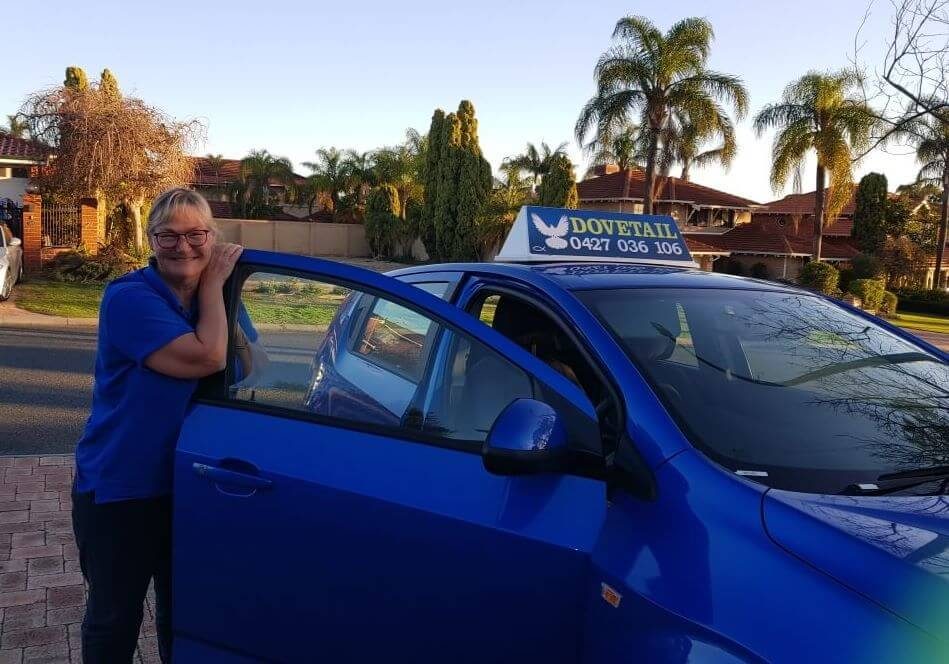
Lisa Archer runs Dovetail Driving School as the sole instructor and offers private one-to-one lessons across Perth’s northern suburbs. She can help with any stage covered in this guide, including beginner driving lessons, parking practice, freeway driving, and general PDA preparation.
If you would like help deciding what to practise next, contact Lisa to discuss your experience, confidence and lesson needs.