

Learning to drive in Perth feels exciting, but it can also feel a bit scary when the weather changes. Roads that feel easy on a clear, dry day can feel completely different once rain, heat, or wind show up. If you understand how weather affects braking and reaction time, you can stay calmer, make safer choices, and feel more ready for your driving test. You can learn more about safe driving basics in the WA Driver Handbook.
Every time a driver needs to slow or stop, two things matter. The first is reaction time, which is how long it takes the brain and body to detect a hazard and move the foot to the brake pedal. The second is the braking distance, which is how far the car travels from the moment the brakes are applied until it comes to a stop. Weather conditions in Perth can change both of these, often without a learner even realising.
In Perth, new drivers usually deal with a few key weather patterns that affect safety.
- Rain and wet roads. Even light rain can mix with dust and oil on the road, creating a slippery surface. This can reduce tyre grip, so the car takes longer to stop.
- Heat and hot roads. Long periods of hot weather can affect tyre condition and brake performance. Drivers may also feel tired or uncomfortable, which can slow reaction time.
- Wind. Strong coastal winds can push the car slightly sideways, especially at higher speeds. This can make it harder to stay steady in the lane and can distract a nervous learner from focusing on braking and hazards ahead.
For a learner, all of this can feel like a lot. The good news is that the weather does not have to control the drive. With clear knowledge and simple habits, such as adjusting speed and leaving more space, new drivers can stay in control.
Safe driving in all weather begins with understanding what the car and the driver are dealing with.
As skills grow, lessons that cover rain, heat, wind, and even night driving can help build strong, calm habits. Support from an experienced instructor, such as one who provides focused sessions on topics like driving in the rain, helps learners and parents feel more confident tackling Perth’s changing conditions.
How Weather Affects Braking and Reaction Time
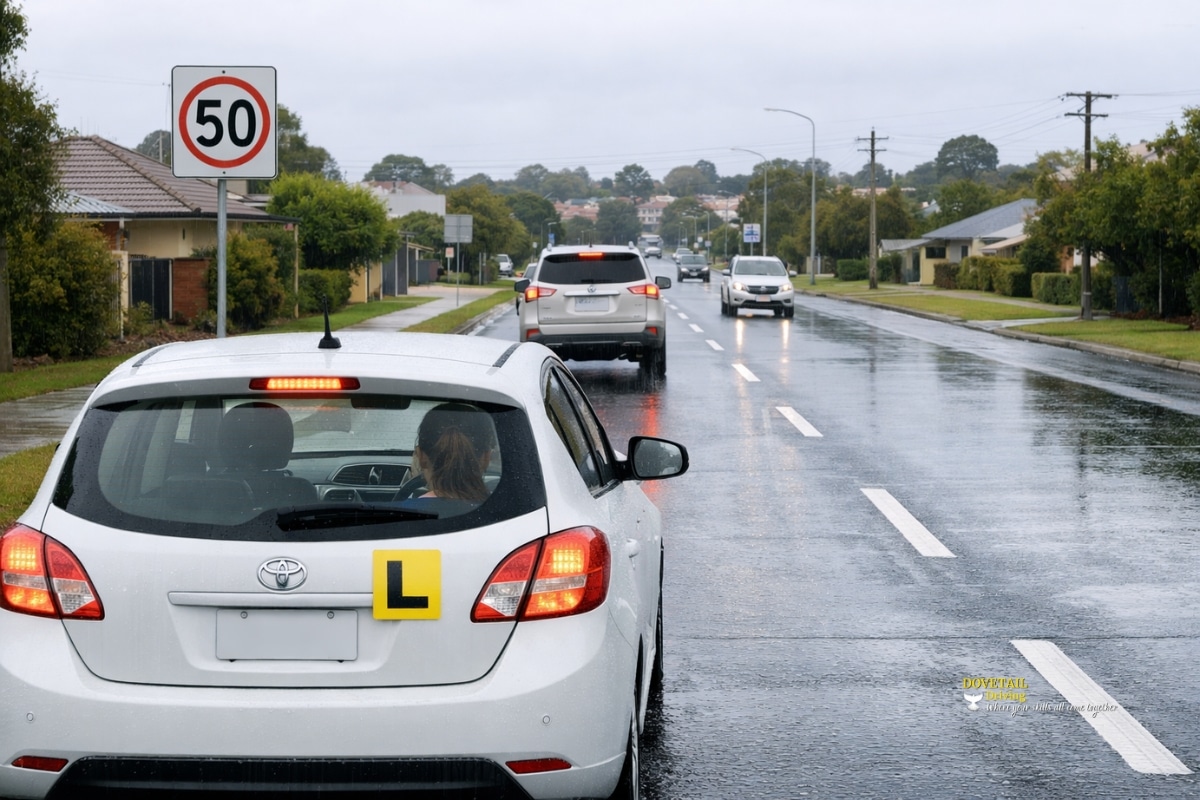
Braking feels simple on a dry, quiet Perth street. Press the pedal, the car slows, and it all feels predictable. Once rain, heat or dust arrive, that smooth feeling can change. For a learner, it can feel like the car is not listening as well as it did in good weather.
Wet Roads and Slippery Surfaces
When it rains, water mixes with dust, oil and dirt that sit on the road surface. This creates a thin, greasy layer. Tyres need rough, dry contact with the road to grip properly. If there is a layer of water and grime, there is less friction, and the tyres can slide more easily.
This means:
- The car can take longer to stop, even with normal braking.
- Hard or sudden braking can cause the tyres to lock or the car to skid.
- Stopping distances grow, even at speeds that felt safe in the dry.
New drivers in Perth should brake earlier and more gently in the wet. A good habit is to ease off the accelerator sooner, then apply steady pressure to the brake pedal instead of a late, sharp press.
Heat and Brake Performance
Long stretches of hot weather can affect both tyres and brakes. Hot roads and repeated braking can increase heat in the brake parts. If brakes become very hot, they may feel softer or less responsive.
In hot conditions, learners should:
- Avoid tailgating so they do not need to brake hard all the time.
- Look further ahead and let the car slow naturally before braking.
- Make sure the car is well maintained, especially the tyres and brakes, using checks similar to those in guides such as “Is Your Car Safe?“
Dust, Debris and Reduced Grip
Dry weather and wind can blow dust, sand or small debris onto Perth roads. This can create a loose layer that sits between the tyre and the surface, a bit like tiny ball bearings. The result is less grip and a higher chance of the car sliding if the driver brakes too hard or turns suddenly.
On dusty or dirty roads, learners should keep speeds modest, steer smoothly, and use gentle, progressive braking. If braking habits adjust to the weather, the car feels more stable, and confidence grows with each drive.
Weather’s Influence on Driver Reaction Time
Reaction time is the space between noticing something and doing something about it. In the car, that means spotting a hazard, deciding what to do and moving the foot to the brake. The weather in Perth can quietly stretch that time out, especially for new or nervous drivers.
Reduced Visibility in Rain and Glare
Rain, spray from other cars and cloudy windscreens all make it harder to see what is ahead. If a learner cannot see clearly, the brain needs longer to work out what is going on. That delay turns into extra metres of travel before braking even begins.
On the other side, bright sun and glare can be just as tricky. Low sun can reflect off wet roads, bonnets and mirrors. Learners may squint, lean forward, or look away for a moment, which slows their ability to spot things like brake lights, lane markings, or crossing pedestrians.
Simple habits help, such as:
- Keeping the windscreen clean inside and out.
- Using wipers and demisters early, not waiting until vision is very poor.
- Wearing suitable sunglasses to reduce harsh glare.
Discomfort and Distraction from Weather
Heat, sticky seats, dripping raincoats or strong wind noise can all distract a driver. The mind drifts to thoughts like “I am too hot” or “This feels out of control” instead of focusing on the road. Every bit of attention diverted from driving slows reaction time.
New drivers can set the car up before moving off. Adjust the air conditioning, clear fog on the glass, and choose a comfortable driving position. If the weather feels intense, it is better to pull over safely for a short reset than to push on while flustered.
Anxiety in Unfamiliar Weather
Many Perth learners have mostly driven in dry, clear conditions. The first proper wet day or a windy freeway run can trigger anxiety. When nerves rise, thinking can feel slower and more crowded. Hands may grip the wheel too tightly, breathing can become shallow, and reactions tend to lag.
This is normal for beginners. Confidence grows when the weather is gradually introduced during practice sessions. Structured lessons, such as a focused night or low-visibility driving lesson, can give learners a calm space to experience different conditions with clear guidance.
The key is not to rush. With time, clear routines and patient support improve reaction time, even when Perth’s weather is less than perfect.
Practical Tips for New Drivers to Adapt to Weather Conditions
The weather conditions can change how the car behaves and how the body feels. The goal is to stay calm and give both the driver and the car more time and space to work things out. These simple habits help learner drivers in Perth feel safer in rain, heat and wind.
Keep a Safe Following Distance
In any difficult weather, more space is the best friend a new driver can have. Extra space means extra time to notice problems and brake gently.
- Slow down a little as soon as the road looks wet, dusty or windy.
- Leave a bigger gap to the car in front so there is time to react if they brake suddenly, using the three-second gap rule.
- Back off calmly if another driver is tailgating, so there is still a safe zone ahead.
More space on the road means less pressure in the mind.
Brake Gently and Earlier
In difficult weather, harsh braking can unsettle the car and the driver. Aim for soft, steady inputs instead.
- Look further ahead, and plan stops early.
- Lift off the accelerator sooner, then use light, smooth pressure on the brake.
- Avoid sudden brake stabs at the last moment, especially on wet or dusty roads.
- In traffic, let the car roll a little on engine braking before touching the pedal.
These habits protect braking distance and also look very positive to assessors during a Practical Driving Assessment.
Stay Focused Despite Discomfort
Weather often makes the body feel uncomfortable, which can pull attention away from the road. A short setup routine before moving off can make a big difference.
- Set the air conditioning or heating to keep the cabin comfortable.
- Clear fog from the windows and adjust mirrors for the best vision.
- Keep a small towel or cloth in the car to wipe moisture from hands or the steering wheel.
- Place water within reach so short breaks can be used to rehydrate on hot days.
If focus starts to slip, it is perfectly acceptable to find a safe place to pull over, reset and then continue.
Practice Calmness to Improve Reaction Time
Calm minds react faster and more clearly. Nervous learners can build this skill just like any other.
- Before starting, take a few slow breaths and plan the first part of the route.
- Use a simple phrase, such as “slow, smooth, steady,” to stay centred when the rain or wind picks up.
- Keep your hands relaxed on the wheel instead of gripping tightly.
- Choose quieter streets or supervised lessons when first practising in bad weather.
Structured lessons, such as a focused session on low-visibility and night driving, help learners and parents build calm routines that carry over to all weather conditions. With practice, these habits become automatic, and reaction time improves without the driver needing to overthink every move.
Supporting Your Teen Driver: Guidance for Parents
Parents play a big part in how confident a learner feels in different weather. Calm support at home, plus clear routines in the car, can turn wet, windy, or hot days into useful practice rather than something to fear.
Plan Supervised Practice in Different Weather
Safe experience is the best teacher. Try to give your teen practice in a mix of conditions, not just clear afternoons.
- Choose quiet streets or car parks when first practising in rain or strong winds.
- Keep early wet weather sessions short, with a clear plan such as basic braking and turning only.
- Talk through what the car might feel like before you start, for example, longer stopping or more steering correction.
- Use any break in the weather to discuss what went well and what felt difficult.
If you prefer an expert alongside your teen for the trickier conditions, a focused session with a calm instructor, such as a night or low-visibility driving lesson, can help build skills and reassurance.
Build Confidence Gradually
Many teens feel nervous in unfamiliar weather, even if they do not say it. Confidence grows in small, steady steps.
- Start with slower roads before moving to busier routes in the same weather type.
- Repeat similar routes so your teen can feel the difference between dry, wet and windy days on roads they already know.
- Ask open questions such as, “How did the brakes feel in that rain?” instead of only giving instructions.
- Notice progress, for example, smoother braking or better use of wipers, and say it out loud.
Calm, steady feedback is more powerful than perfect technique.
Encourage Safe Braking Habits
Good braking is at the heart of safe driving in any weather. Parents can quietly coach this on every drive.
- Remind your teen to look ahead and start slowing down early at intersections and in traffic.
- Point out when conditions change, such as fresh rain on a dry road, and ask them to increase following distance.
- Discourage last-second braking. If it happens, talk about what they could have noticed earlier.
- Help them get into the habit of checking tyre condition and brake feel before longer trips.
Support Calm, Fast Reactions
Teens copy the emotional tone of the supervising driver. If a parent stays calm in rain or wind, the learner usually settles faster, too.
- Keep your voice low and clear, even when giving urgent directions.
- Avoid sudden criticism. Wait until the car is parked to go over any concerns.
- Encourage simple breathing or reset pauses if your teen seems tense.
- If either of you feels too stressed, suggest a safe pull over and a short break.
For some families, working with a patient professional can reduce tension in the car. Courses such as beginner driving lesson packages give teens and parents structured support so that safe braking and calm reactions become normal, whatever the Perth weather is doing.
Common Mistakes to Avoid When Driving in Different Weather
New drivers in Perth often make the same mistakes when the weather changes. The car feels different, the road looks different, and nerves can rise quickly. The good news is that once you know these common traps, you can avoid them and stay in control.
Braking Too Hard on Wet or Dusty Roads
One of the biggest mistakes is keeping dry weather habits when the road is slippery. Many learners brake hard at the last moment, just like they would on a dry surface. On wet or dusty roads, this can cause skids or sudden loss of control.
To avoid this:
- Start slowing earlier whenever you see a stop sign, red light or traffic building up.
- Use gentle, steady pressure on the brake instead of sharp jabs.
- Keep steering smoothly so the tyres are not trying to turn and brake hard at the same time.
Not Increasing Following Distance
Another frequent error is sitting too close to the car in front of you when the road is wet, hot, or windy. If that driver brakes suddenly, there is not enough time or space to react safely.
Better habits include:
- Leaving a bigger gap whenever the surface is wet, loose or shiny.
- Backing off slightly if you notice yourself creeping closer in traffic.
- Practising this on quiet roads first so it feels natural before your test.
Ignoring Early Warning Signs from the Car
In tough weather, small changes in how the car feels are early warnings. Many learners ignore these signs, such as brakes feeling soft, tyres slipping a little on take off or steering feeling light in strong wind.
Instead of brushing these off:
- Slow down as soon as something feels different or uncertain.
- Check tyre and brake condition regularly, using simple checks like those in this guide to car suitability.
- Tell a supervising driver or instructor if something does not feel right.
Letting Panic Take Over
When heavy rain starts or a strong gust of wind hits, some learners freeze or overreact. They might slam on the brakes, stare at one spot, or forget to check their mirrors. This delays safe reactions and can scare both driver and passengers.
To stay steady:
- Focus on a simple plan, such as “slow, straighten, breathe”.
- Keep your eyes moving, checking mirrors and ahead for hazards.
- If you feel overwhelmed, find a safe place to pull over and reset.
- Consider a calm, structured lesson, such as a session that covers higher speeds and wind, to build confidence gradually.
Small, steady corrections beat sudden, dramatic moves, especially in tricky weather.
Conclusion and Encouragement for Safe, Confident Driving

The weather can change how a car stops and how a driver thinks, but it does not have to control the whole drive. When learners in Perth understand how rain, heat and wind affect braking and reaction time, they can make simple adjustments that keep everyone safer.
The key ideas are straightforward.
- Braking changes with the road surface. Wet, dusty or very hot roads reduce grip and can affect how brakes feel, so learners need to slow earlier and brake more gently.
- Reaction time changes with how the driver feels. Poor visibility, glare, discomfort, and nerves all slow down decision-making, so it helps to stay calm and set the car up properly before moving off.
- More space gives more time. Bigger following gaps and smoother speeds make tricky weather manageable, even for new drivers.
For learners who feel anxious, it is important to remember that confidence does not appear all at once. It grows each time they practise safe habits, notice an improvement and handle a new condition a little better than the last time. Parents can support this by staying calm, planning supervised drives in different weather and focusing on progress, not perfection.
If a driving test is coming up, weather awareness becomes part of good preparation. Practising in safe, quiet areas first, then slowly building up to busier roads, helps learners feel ready if the test day arrives with rain or wind. Guides such as this one, along with focused resources like practical driving test preparation tips, can complement hands-on practice to build a strong foundation.
You do not need to be a fearless driver, just a prepared and thoughtful one.
For anyone who wants structured help, a calm professional like Lisa Archer, a supportive local driving instructor, can guide both learners and parents through wet weather, hot conditions and windy coastal roads. With patient teaching, clear routines and regular practice, Perth’s changing weather simply becomes another skill, not something to fear.
You and your teen can learn safe braking, steady reactions, and confident decision-making, one drive at a time.



Recent Comments