

School zones can feel a bit stressful at first, especially when you are still getting used to being behind the wheel. Learning the basics of safe driving in school zones helps learner drivers stay calm, follow the rules, and feel more confident on everyday trips around Perth.
Understanding What A School Zone Is
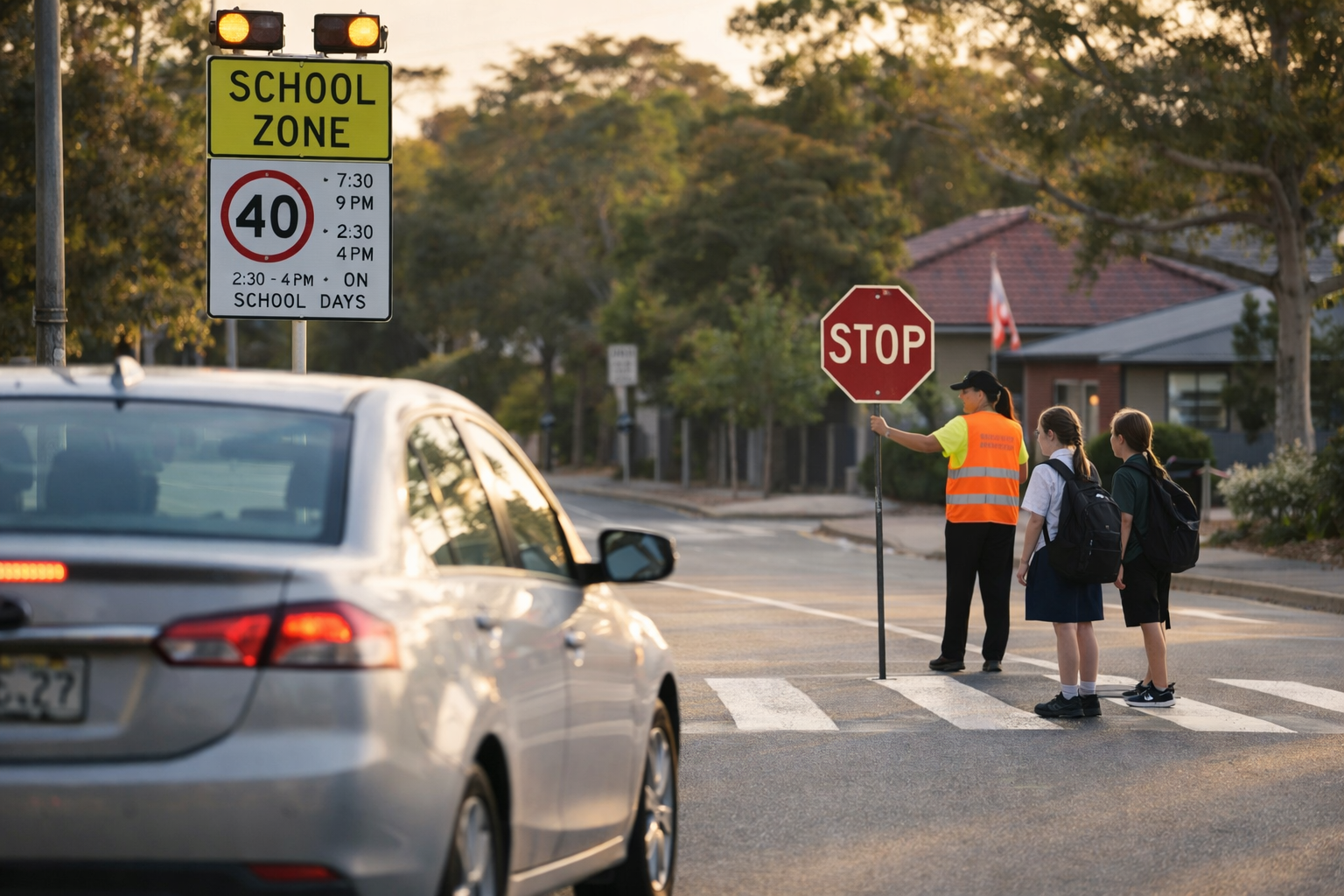
A school zone is an area of road near a school that has special rules to protect children. You will see:
- School zone signs that show a lower speed limit
- Times of operation on the sign for school days and bell times
- Flashing orange lights at some locations to remind you to slow down
These signs help drivers quickly recognise the school zone driving rules that apply during school hours.
In the northern suburbs where Lisa teaches, you will drive through school zones in places such as Carine, Duncraig, Warwick, Balga, Stirling, Innaloo, Scarborough, Karrinyup, Gwelup, Padbury, and many nearby areas. If you live or learn in these suburbs, school zones will be part of your everyday routes and your driving lessons.
Why School Zones Need Extra Care
Children behave differently from adults around traffic. They can be:
- Unpredictable, especially for younger children
- Hard to see behind parked cars, buses, and trees
- Distracted, focused on friends instead of traffic
This is why the speed limit in school zones is lower during set times. These rules are designed to support safe driving in school zones and protect. These situations are exactly why safe driving in school zones requires drivers to stay alert and reduce speed during school hours.
Key Features Of School Zones In Perth
When you drive through a school zone, you need to watch for:
- Reduced speed limit, shown clearly on the sign
- Crossing supervisors with fluorescent vests and stop signs
- Marked children’s crossings with flags or signs
- School buses and more parked cars at drop-off and pick-up times
Specific road rules apply. For example, you must:
- Slow to the school zone speed limit during the signed times
- Stop when a crossing supervisor holds up a stop sign, and wait until they completely lower it and the crossing is clear before you move
- Avoid stopping or parking in signed “No Stopping” or “No Parking” areas near the school
- Stay off your phone and avoid distractions so your full attention stays on the road and the children around you
Your awareness makes the difference. When you stay calm, look ahead, and follow the school zone rules, you help keep children safe and build strong habits that support you in your driving test and for life.
Essential Rules for Safe Driving in School Zones in Perth
Safe driving in school zones is not just about passing your PDA. It is about protecting children and giving drivers enough time to react when something unexpected happens near schools.
Follow the Speed Limit Every Time
The reduced speed limit in a school zone is not a suggestion. You must:
- Slow to the signed school zone speed limit during the listed times
- Stay at or below that speed for the entire length of the zone
- Check your mirrors and speedometer often so your speed does not creep up
If you are unsure, ease off the accelerator early and roll gently down to the correct speed. Learners often get marked in the PDA for slowing down too late in school zones, so this habit really helps.
Stopping for Crossings and Supervisors
When you see a crossing supervisor or a flagged children’s crossing, be ready to stop smoothly. You must:
- Stop when the supervisor raises the stop sign
- Wait until the crossing is clear and the sign is lowered before you move off
- Avoid blocking the crossing with your car, even partly
Approach slowly, cover the brake, and look well ahead so there are no harsh last-second stops.
Watch for Flashing Lights and Signs
Some Perth school zones have flashing orange lights. Treat these as a clear reminder to:
- Check the time against the sign
- Confirm the speed limit and adjust early
- Increase your observation of footpaths, bus stops, and parked cars
Stay Focused, Not Distracted
In a school zone, you need your full concentration. That means:
- No mobile phone use, even at a stop
- No adjusting playlists, navigation, or mirrors while moving
- Keeping chat in the car calm and low-key
If distractions make you nervous, structured lessons can help you build focus. Many learners find it useful to read guides such as “Common Reasons Learners Fail Their Driving Test” to learn which habits to avoid.
Use Defensive Habits that Work Everywhere
To practise safe driving in school zones, follow these habits every time:
- Scan ahead for children near the kerb, bikes, scooters, and school buses
- Expect sudden movement, such as a child stepping out from between parked cars
- Adjust for conditions. In rain, dark, or glare, slow even more and leave extra space
- Keep a safe following distance so you can stop smoothly if the car in front brakes for a child or crossing
Consistent safe habits protect you and everyone around you. The more you repeat these behaviours, the more natural they feel, both in everyday driving and during your test.
Building Confidence for Safe Driving in School Zones
Feeling tense when you see a school zone sign is very common, especially if you are new to driving in Perth or have just moved from overseas. Lisa’s lessons are designed so you never feel thrown in the deep end. Instead, you build your school zone skills step by step while learning the key school zone driving rules, at a pace that suits you.
Step 1: Gentle Introduction and Familiarisation
Lisa starts by explaining how school zones work in Western Australia, using simple language and clear road rule guidance. Together, you will usually:
- Look at school zone signs and talk about the times and speed limits while parked
- Plan a simple route that includes one or two local school zones in areas like Carine, Duncraig or Warwick
- Drive through at quieter times so you can focus on signs, speed, and positioning without heavy traffic
This early stage builds understanding first, then driving practice, so you are not trying to learn everything at once.
Step 2: Building Skills in Real Traffic
As your confidence grows, lessons move into more active school periods. Lisa helps you:
- Practise slowing smoothly to the school zone speed limit well before the sign
- Judge safe gaps, especially when crossing supervisors and children are near the road
- Manage heavier traffic, parked cars, and school buses without feeling rushed
You get clear, calm coaching in the moment, such as when to ease off the accelerator, when to apply the brakes, and how to scan for children and hazards.
Supportive, One-On-One Coaching When Mistakes Happen
Mistakes are part of learning. If you brake late, miss a sign, or feel flustered, Lisa stays calm and talks you through what happened. Together you will:
- Pull over safely if needed and debrief in a low-pressure way
- Break the situation into simple steps so you can see what to do next time
- Repeat the same type of situation with guidance until it feels easier
This one-on-one approach is especially helpful for nervous adults, teen learners, and overseas drivers who may worry about “getting it wrong”.
Balancing Theory and Practical Driving
Each lesson blends short, clear explanations with plenty of driving time. Lisa might use a few minutes parked to review:
- Key school zone rules that relate to your PDA
- Defensive driving habits that keep you safe around children
- Personal tips based on how you drive, not a generic checklist
Then you go straight back to practical driving, so the theory sticks. If you like structured learning, you can also combine your lessons with resources such as driving test practice guidance for WA to support your school zone skills.
The goal is simple. By the time you face busy school zones alone or in your PDA, you feel calm, prepared and in control.
Preparing for the WA PDA with Safe Driving in School Zones
Safe driving in school zones is a key part of getting ready for your WA Practical Driving Assessment (PDA). Assessors want to see that you understand school zone driving rules and can respond calmly when children or crossings appear. Assessors want to see that you can stay calm, follow the rules, and protect children, even when traffic feels busy or distracting.
Demonstrating safe driving in school zones during your test shows the assessor that you can manage risks and protect children near busy school areas.
Why School Zones Matter in Your PDA
During your PDA, you are expected to:
- Notice school zone signs early and respond in time
- Select the correct speed and hold it steadily
- Show strong observation around crossings, buses, and children
- Make clear, safe decisions without rushing
Lisa plans routes that include local school zones in the suburbs where she teaches, so you are not surprised by them on test day.
Common School Zone Mistakes in Tests
Many learners lose marks around schools because they do not always follow important school zone driving rules. Common mistakes include:
- Slow down too late and drift above the signed speed
- Do not see the start or end of the school zone
- Stop harshly at children’s crossings instead of planning ahead
- Roll forward while a crossing supervisor still holds the stop sign
- Focus only on the car in front and miss children near the kerb
In Lisa’s lessons, these problem areas become practice points. You repeat them together until your reactions feel natural and controlled.
How Lisa Tailors Lessons for PDA School Zone Success
Lisa uses one-on-one coaching to match your current level. You will:
- Practise reading the road ahead, not just the speedo
- Use smooth approaches to crossings so you rarely need emergency-style braking
- Combine mirror checks, speed control, and lane position into simple routines
- Talk through what an assessor looks for in school zones during the PDA
If you are unsure about test standards, resources such as how many mistakes are allowed in the WA driving test can also help you understand how your school zone habits will be judged.
Using Your Logbook Hours Wisely
Your logbook is not just about reaching a total number of hours. It should show practice in different environments, including, including learning and applying important school zone driving rules, such as:
- School zones at quieter times, to learn signs and limits
- School zones during typical drop-off and pick-up periods
- Wet weather or low-light driving near schools, where possible
Lisa helps you plan lessons that support this variety, and may suggest extra private practice routes that include school zones. If you are unsure where to drive, guides such as where to practise driving in Perth can give you ideas that fit your local area.
The aim is simple. By the time you sit your PDA, school zones feel familiar, your habits are steady, and you can focus on driving well instead of worrying about surprise situations around schools.
Tips for Nervous or First-Time Drivers in School Zones

Feeling anxious in school zones is very common, especially if you are new to driving, returning after a break, or adjusting to WA road rules. The good news is that nervousness can be managed with clear steps and patient practice.
Learning calm habits for school zones driving helps nervous drivers stay focused and react safely around children and crossings.
1. Get Familiar with Local School Zone Routes
Routes feel less scary when you know what is coming. You can:
- Drive or ride as a passenger through school zones in your area, and just watch what happens
- Notice where the signs start and end, where crossings are, and where traffic usually builds up
- Talk with Lisa about common school zone routes in suburbs like Carine, Warwick, Duncraig or Scarborough so you can practise them together
The more familiar the road feels, the calmer your brain becomes.
2. Practise at Quieter Times First
If you are a first-time or nervous driver, jumping straight into peak school pick-up traffic can feel overwhelming. A calmer approach is to:
- Start practice in school zones outside the busiest drop-off and pick-up times
- Focus on signs, speed control, and observation without heavy traffic pressure
- Gradually move towards more typical school times as your confidence increases
In one-on-one lessons, Lisa will plan lesson times and routes that match your current comfort level.
3. Use Simple Breathing to Settle Your Nerves
Before you start the car, take a short moment to settle your body. Try:
- Breathing in slowly through your nose for a slow count of [insert count]
- Holding for [insert count]
- Breathing out gently through your mouth for a slow count of [insert count]
- Repeating this [insert count] times while you sit still
This helps your muscles relax and makes it easier to think clearly and react smoothly.
4. Focus on One Task at a Time
In busy areas, your brain can feel overloaded. To keep things manageable, focus on:
- First, your speed
- Then, your position on the road
- Then, what is happening ahead with children, crossings, and traffic
Lisa will break school zone driving into simple steps, so you always know what to pay attention to first. If multitasking is hard for you, structured coaching and resources, such as beginner driving lesson guidance, can help you build these skills gradually.
5. Remember that Mistakes Are Part of Learning
You are allowed to make mistakes while you learn. Every learner, teen or adult, local or overseas, has moments where they miss a sign, brake late, or feel flustered.
In Lisa’s car, mistakes are treated as learning chances, not failures. You can expect:
- Calm feedback instead of criticism
- Time to pull over, breathe, and talk about what happened
- Another attempt, with guidance, so you can try again straight away
You do not have to be perfect to be safe. With patient support and regular practice, school zones will start to feel like just another part of your normal, confident driving. If anxious driving is a concern for you, you may also find it helpful to include specific sessions, such as a calm wet-weather driving lesson or night-driving practice, to gradually expand your comfort zone.
The Benefits of Learning with Lisa Archer at Dovetail Driving School
Choosing the right instructor has a big impact on how confident you feel in school zones. With Lisa as a solo instructor at Dovetail Driving School, you always know who will be beside you, talking you calmly through each situation.
One-on-one Attention Every Lesson
With Lisa, you are never passed between different instructors. You get:
- Consistent teaching methods that build on what you learned in the last lesson
- Personalised feedback based on how you actually drive, not a generic script
- Clear goals for each session, such as smoother speed control in school zones or better observation at crossings
This consistency means you spend less time “settling in” each lesson and more time improving your skills.
A Calm, Supportive Learning Environment
Many learners feel nervous in busy areas around schools, especially when they are still gaining confidence with school zone driving. Lisa’s style is patient and low-pressure. You can expect:
- Quiet, clear instructions that give you time to react
- Calm coaching when things do not go to plan
- Space to ask questions without feeling judged
You are never expected to be perfect. The focus is on steady progress and safe habits that will support you in your PDA and beyond.
Flexible Lessons That Fit Real Life
Adult beginners, parents, and overseas drivers often juggle work, study, and family. Lisa works with you to:
- Choose lesson times that suit your schedule
- Plan routes that match your current confidence level
- Include specific practice, such as night or freeway sessions, using options like a dedicated night driving lesson if you need it
Local Knowledge of Perth’s Northern Suburbs
Lisa specialises in the northern suburbs of Perth, including Carine, Warwick, Duncraig, Balga, Stirling, Innaloo, Scarborough, Karrinyup, Gwelup, Padbury, and nearby areas. That means:
- You practise in the same school zones you are likely to drive through every day, building confidence with school zone driving in familiar streets
- Routes can be tailored to your home, work, school, or common travel paths
- You learn how local traffic flows around specific schools, crossings, and bus stops, helping you become more comfortable with school zone driving
If you are comparing driving schools, you might also find it helpful to read guidance on choosing the best driving school in WA, then see how Lisa’s local focus and one-on-one style align with what you want.
The result is simple. You learn with someone who knows your suburbs, understands your nerves, and is committed to helping you feel safe, steady, and confident in every school zone you drive through.
Taking the Next Step: How to Book Your Driving Lessons and Start Driving Safely Today
You have already taken an important step by learning more about school zone safety. The next step is to get calm, structured practice with a supportive instructor who understands Perth’s roads and your nerves.
A Simple, Supportive Booking Process
Booking with Lisa at Dovetail Driving School is straightforward. You can:
- Visit the main website and choose a course or single lesson that suits you
- Look at the options for automatic, manual or special sessions, such as night driving
- Contact Lisa directly to ask questions, discuss your experience, and pick a time
If you like to see all the options first, you can browse the current lesson choices and packages through the driving lesson courses and packages page, then follow up with a quick call or message.
What Happens In Your First Lesson
Your first lesson is about comfort and safety, not perfection. Lisa will usually:
- Have a friendly chat about your driving history, confidence level, and goals
- Check what you already know about school zones and WA road rules
- Start in a quieter area to get you used to the car and basic controls
- Introduce one or two simple school zone situations when you are ready
You set the pace. If you feel unsure, you can slow things down and ask for more explanation or extra practice on any skill.
Planning Your Path To Safe, Confident Driving
Together, you and Lisa can map out a plan that fits your life and goals. That might include:
- Regular lessons that focus on school zones in your local suburbs
- Sessions that target PDA preparation, including common test routes and tasks
- Extra practice in areas you find stressful, such as heavy traffic or night driving
If you are wondering how many lessons you might need, guides like “how many driving lessons a beginner needs” can help you form realistic expectations.
Your driving journey starts with one decision. When you book that first lesson, you get patient guidance, clear steps, and a calm instructor by your side. With steady practice and the right habits for safe driving in school zones, these areas become safer, less stressful, and simply another part of confident school zone driving around Perth.


Recent Comments